
A practical roadmap for building a stronger, more self-reliant Vanuatu
Introduction: We Have the Resources. Now We Need the Results.
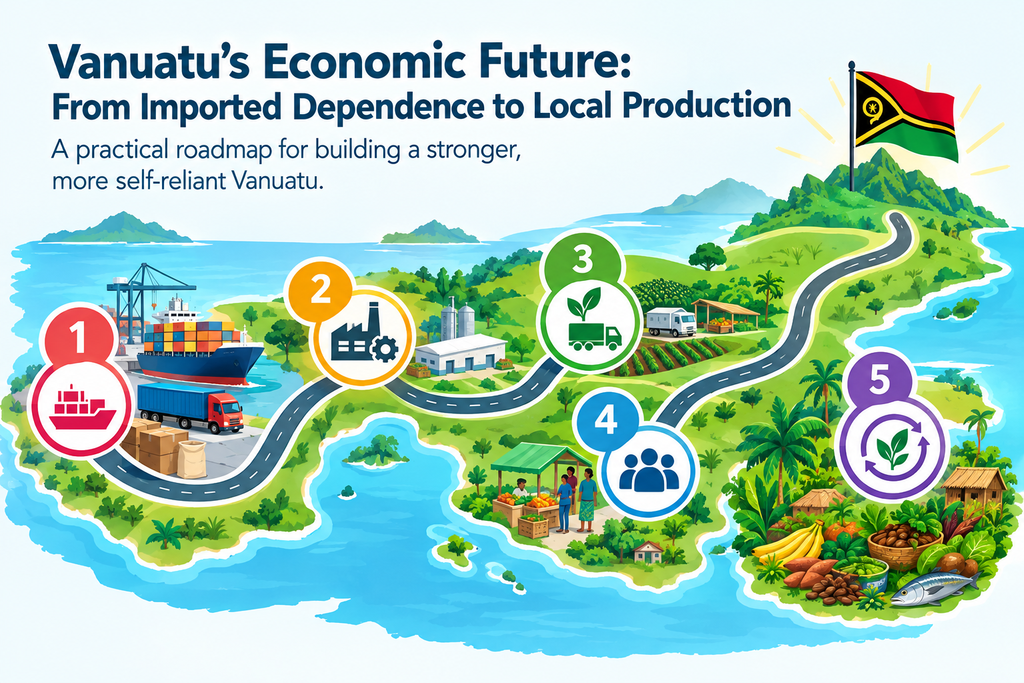
Between 1978 and 2010, China transformed its economy through agricultural reform, infrastructure investment, manufacturing, energy development, and workforce training. It created opportunities for rural communities, expanded industrial production, and became a major global manufacturing power.
Vanuatu cannot simply copy China’s model. We have a different population, geography, economy, system of customary landownership, and level of financial resources. However, we can learn from one important principle: a country becomes economically stronger when it develops the ability to produce, process, and profit from its own resources.
Vanuatu has fertile agricultural land, kava, copra, cocoa, cattle, fisheries, timber, tourism, and renewable energy potential. We also have hardworking people, young talent, and communities with generations of knowledge.
Yet we remain heavily dependent on imported food, fuel, machinery, and manufactured goods. Many of our valuable raw materials are exported with limited local processing, meaning that opportunities for manufacturing, employment, and higher profits are created overseas rather than at home.
The problem is not that Vanuatu has nothing to offer. The challenge is turning our resources into a stronger domestic economy.
We have already pursued development policies and programmes in several of these areas. What we need now is to examine what has worked, what remains incomplete, and what practical changes could deliver better results.
Vanuatu does not need to become China. It needs a development strategy that works for Ni-Vanuatu people, protects customary ownership, strengthens local businesses, and creates lasting economic independence.
1. AGRICULTURE AND CUSTOMARY LAND: EMPOWER OUR FARMERS –
What China did
China’s agricultural reforms in the late 1970s and early 1980s gave farming households greater responsibility for production and stronger incentives to benefit from their work. These reforms contributed to improvements in agricultural productivity and rural incomes.
The lesson for Vanuatu is that farmers need more than land. They need secure access to it, finance, transport, equipment, and reliable markets.
What Vanuatu has done
Vanuatu already has productive farmers and established agricultural industries. Government policies recognise the importance of agriculture, rural development, and improved access to markets.
Our customary land system also protects a fundamental part of our national identity: ancestral land belongs to its customary owners and must not be treated as an ordinary commercial asset.
However, farmers and cooperatives can struggle to obtain commercial financing, expand production, invest in equipment, and secure long-term agreements that give lenders confidence.
Meanwhile, the high cost, unsafe and unreliability of inter-island shipping can make locally grown produce expensive to transport.
What needs to change
Proposal 1: Customary Land Commercialization Act
Develop a legal framework that allows customary landowning groups to establish Clan Development Trusts or similar community-governed entities.
These entities could enter into voluntary, long-term agricultural use agreements with farming cooperatives, subject to customary consent, transparent governance, and appropriate legal safeguards.
The objective would be to give farmers sufficient security to invest in agricultural production without transferring ancestral ownership.
Government, banks, and legal experts should also explore ways to finance productive farming through equipment, cooperative assets, secured contracts, crop insurance, and expected agricultural revenue.
Any use of future crop revenue as security would need carefully designed rules to protect farmers from excessive debt and ensure that banks cannot use financing arrangements to undermine customary ownership.
Proposal 2: Domestic Maritime Highway Act
Establish a reliable, affordable inter-island freight system for agricultural products and essential goods.
This could include a state-supported shipping service, competitively awarded route subsidies, or public-private partnerships that guarantee regular service to underserved islands.
The government should assess whether targeted freight subsidies could make it cheaper to transport locally produced taro, kava, cattle, fruits, and vegetables to major markets.
Funding mechanisms should be transparent and economically sustainable rather than relying on an untested assumption that a tax on imported processed foods would cover the entire cost.
Proposal 3: Stronger local food markets
Encourage hotels, resorts, supermarkets, schools, and government institutions to purchase more locally produced food where supply, quality, price, and food-safety requirements can be met.
Establish agricultural collection centres, cold-storage facilities, and processing cooperatives in suitable locations.
The objective is simple: make it worthwhile for farmers to grow more, easier for them to sell their produce, and more affordable for Vanuatu to feed its own people.
Our target: Increase domestic food production, improve farmers’ incomes, reduce avoidable food imports, and protect customary land for future generations.
2. ENERGY INDEPENDENCE: STOP LETTING FUEL IMPORTS HOLD US BACK
What China did
China invested in electricity generation, hydropower, transmission infrastructure, and industrial energy systems to support economic development.
Reliable electricity helped factories operate, businesses expand, and communities participate in a growing economy.
What Vanuatu has done
Vanuatu has recognised the need to expand renewable energy and reduce dependence on imported fossil fuels.
Solar power, wind energy, suitable hydropower projects, and coconut-based biofuels offer opportunities to strengthen energy security.
However, renewable energy projects face practical barriers, including financing, equipment costs, maintenance, fuel supply, and the difficulties of servicing remote islands.
A national renewable energy commitment does not automatically mean every island has affordable, reliable electricity.
What needs to change
Proposal 4: Rural Energy Independence Act
Develop island-specific energy plans based on local resources, technical feasibility, and cost.
Solar and battery systems may suit some communities, while wind, micro-hydropower, or coconut-based biofuels may be appropriate in others.
The government should support community cooperatives and local businesses that want to install renewable energy systems for refrigeration, agricultural processing, fisheries, and manufacturing.
Tax exemptions or reduced import duties for suitable renewable energy equipment could be considered, with safeguards to ensure the benefits reach local producers.
Proposal 5: National Coconut Biofuel Strategy
Vanuatu should investigate the commercial potential of locally produced coconut oil as a substitute for imported diesel in suitable applications.
A mandatory blending requirement, such as a proposed 20% coconut-oil biodiesel blend, could be evaluated through technical and economic studies before any law is introduced.
The assessment should establish whether sufficient coconut oil can be produced consistently, whether engines and generators can use the fuel safely, how production costs compare with imported diesel, and how local farmers would be paid.
If a blending mandate proves viable, legislation could establish clear targets, quality standards, purchasing arrangements, and a realistic implementation timetable.
Our target: Reduce exposure to imported fuel, improve energy security, support local coconut producers, and make electricity more accessible to rural businesses.
3. MANUFACTURING: KEEP MORE OF OUR ECONOMIC VALUE IN VANUATU
What China did
China established economic development zones, attracted investment, expanded industrial infrastructure, and encouraged manufacturing and exports.
These zones helped businesses develop new industries and move into higher-value production.
What Vanuatu has done
Vanuatu has pursued economic development initiatives, including the Santo Economic Development Zone, to encourage investment and regional economic activity.
However, creating an economic zone does not automatically produce factories, skilled employment, or profitable local industries.
Manufacturers need reliable electricity, transport, finance, skilled workers, appropriate infrastructure, and access to customers.
What needs to change
Proposal 6: Value-Added Manufacturing and Economic Development Zone Act
Strengthen economic development initiatives in Luganville and Port Vila by attracting businesses that process Vanuatu’s raw materials into finished or higher-value products.
Examples include:
- Kava: Process and package quality-controlled kava products locally.
- Cocoa: Expand local chocolate production and branded cocoa products.
- Coconut: Manufacture coconut oil, soaps, cosmetics, and other coconut-based goods.
- Timber: Develop sustainable furniture and finished wood products.
- Fisheries: Explore local fish processing, freezing, packaging, and other value-added products.
- Agriculture: Process and package locally grown foods for domestic consumption and export.
Government incentives could include transparent tax concessions, streamlined business licensing, industrial infrastructure, and support for eligible local manufacturers.
Proposal 7: Responsible raw-material export reform
Vanuatu should examine whether exporting certain unprocessed materials prevents the country from capturing opportunities for local employment and manufacturing.
One proposal is to increase taxes on selected raw-material exports while offering incentives to businesses that process those materials domestically.
However, broad or aggressive export restrictions could harm farmers if local processors cannot offer competitive prices or purchase sufficient quantities.
Any reform should therefore begin with commodity-specific research, consultation with customary owners and producers, market analysis, and pilot programmes.
Where local processing is commercially viable, the government could introduce phased incentives or carefully targeted measures to encourage more domestic value addition.
The objective should not be to punish exporters or investors. It should be to create conditions in which processing more of Vanuatu’s resources locally becomes economically attractive.
Our target: Create more local manufacturing jobs, increase domestic business ownership, expand exports of finished products, and retain a greater share of the profits generated by Vanuatu’s resources.
4. LABOUR AND SKILLS: TURN OVERSEAS EXPERIENCE INTO LOCAL OPPORTUNITY
What China did
China expanded technical education, vocational training, and workforce development alongside industrial growth.
Its expanding economy created demand for workers with practical skills in manufacturing, engineering, construction, and other industries.
What Vanuatu has done
Vanuatu has vocational education and training initiatives and participates in overseas labour mobility programmes, including Australia’s PALM scheme and New Zealand’s Recognised Seasonal Employer scheme.
These programmes provide employment and income opportunities for Ni-Vanuatu workers and their families.
However, the departure of experienced workers can create shortages for local employers, while returning workers may struggle to find suitable technical employment or opportunities to establish businesses.
The answer is not necessarily to stop people from working overseas. It is to create stronger pathways for them to return with skills, savings, and opportunities to invest at home.
What needs to change
Proposal 8: Mandatory Technology Transfer and Apprenticeship Act
Require eligible foreign investors receiving significant government concessions or operating in designated sectors to contribute meaningfully to local skills development.
This could include paid apprenticeships, technical training, mentoring, and measurable knowledge-transfer programmes.
One proposal worth evaluating is a requirement for two Ni-Vanuatu apprentices for every expatriate work permit in specified roles or projects.
However, a rigid ratio across every industry could create difficulties where specialist skills are scarce or where businesses cannot immediately provide appropriate training.
A more practical approach would establish sector-specific requirements, accreditation standards, reporting obligations, and realistic transition periods.
Work-permit renewals could take compliance with approved training plans into account, subject to fair procedures and existing legal obligations.
The objective is to ensure that foreign investment leaves behind more than buildings and infrastructure. It should also leave behind Ni-Vanuatu people with the skills to maintain, operate, and eventually lead those industries.
Proposal 9: Seasonal Worker Reinvestment Scheme
Create a voluntary programme that allows returning seasonal workers to invest part of their overseas earnings in productive businesses at home.
A proposed Ni-Vanuatu Sovereign Wealth Co-operative Fund could offer matched government contributions, subject to available funding, clear eligibility criteria, and strong financial oversight.
Eligible investments might include agricultural machinery, fishing equipment, food-processing facilities, refrigeration, transport services, and manufacturing equipment.
Participants should receive business training, financial guidance, and support in developing viable business plans.
Participation should remain voluntary, with transparent fees and protections against financial exploitation.
Our target: Develop a skilled domestic workforce, help returning workers build successful businesses, and ensure overseas employment contributes to long-term national development.
5. THE BIGGEST CHALLENGE: MOVING FROM POLICY TO IMPLEMENTATION
Across all four pillars, the central challenge is the same.
Vanuatu has recognised many of these economic problems and has pursued policies and programmes intended to address them.
But a policy announcement is not the same as a completed project. A development zone is not the same as a functioning manufacturing industry. A renewable energy target is not the same as reliable electricity. A vocational training programme is not the same as a skilled worker finding a sustainable job.
The missing link is effective implementation.
Vanuatu needs a coordinated economic development programme with clear responsibilities, realistic funding, measurable targets, transparent reporting, and independent evaluation.
For every major initiative, the government should be able to answer five questions:
- What has actually been completed?
- How much public money and external funding has been committed and spent?
- What measurable benefits have been delivered to Ni-Vanuatu people?
- What obstacles are preventing further progress?
- What specific action will be taken next, by whom, and by when?
Annual public reports should measure progress in areas such as food production, agricultural incomes, shipping costs, renewable energy access, local processing, domestic employment, apprenticeships, and small-business growth.
Existing programmes should be evaluated before new ones are created. Where an initiative has failed to deliver, the government should identify the reasons and make necessary changes.
The measure of leadership should not be how many policies are announced, but how many meaningful improvements are delivered to the people.
6. A PRACTICAL FIVE-YEAR ROADMAP
Vanuatu does not need to implement every proposed reform simultaneously. It needs a realistic sequence of actions.
Year 1: Review, plan, and establish accountability
- Audit existing legislation, economic development programmes, and infrastructure projects.
- Identify the main barriers facing farmers, local manufacturers, and small businesses.
- Consult customary landowners, provincial authorities, businesses, workers, and communities.
- Assess domestic shipping costs, renewable energy options, and local processing opportunities.
- Publish a funded implementation plan with clear responsibilities and measurable targets.
Years 2–3: Launch practical pilot programmes
- Improve shipping reliability on selected agricultural routes.
- Establish agricultural collection and storage facilities in suitable locations.
- Pilot community renewable energy projects linked to productive economic activity.
- Expand vocational training and paid apprenticeships.
- Support local processing of selected agricultural and fisheries products.
- Introduce voluntary support programmes for returning seasonal workers.
Years 3–4: Expand what works
- Extend successful shipping and agricultural initiatives to additional islands.
- Attract investment into commercially viable local processing industries.
- Strengthen access to business finance and productive equipment.
- Expand local procurement opportunities.
- Introduce carefully assessed legislative reforms that protect customary ownership while enabling responsible commercial development.
Year 5: Measure the results
- Evaluate changes in food imports, agricultural incomes, shipping costs, and local production.
- Measure the number and sustainability of jobs created.
- Assess the performance of renewable energy and manufacturing investments.
- Review the effectiveness of tax incentives, apprenticeship requirements, and business support programmes.
- Publish an independent report explaining what has worked, what has failed, and what must happen next.
The ultimate objective is to establish a system in which agriculture supplies local processing industries, reliable energy supports production, manufacturing creates skilled employment, and skilled workers strengthen the wider economy.
CONCLUSION: IT IS TIME TO BUILD A STRONGER VANUATU
Vanuatu’s economic future should not depend indefinitely on imported food, imported fuel, external financing, and the export of raw materials with limited domestic processing.
We must create more opportunities for our farmers to earn a fair income, our businesses to grow, our young people to acquire valuable skills, and our communities to benefit from the resources they own.
We must protect customary land while enabling responsible economic development. We must welcome investment while ensuring it contributes to local employment and knowledge transfer. We must support overseas workers while creating better opportunities for them to invest and build businesses when they return.
Most importantly, we must hold ourselves accountable for turning development commitments into real results.
China’s experience shows the importance of coordinated reforms, infrastructure, productive industries, and workforce development. Vanuatu must adapt these lessons to our own circumstances, rather than attempt to reproduce another country’s model.
Our development strategy should be built around a simple principle:
Produce more locally. Process more locally. Employ and train more Ni-Vanuatu. Keep more economic value in the country. Protect our land and resources. Measure progress by results.
We already have many of the resources required to build a stronger economy.
What we need is a practical, transparent, and sustained commitment to using them wisely.
Vanuatu’s future must not simply be about attracting wealth into the country. It must be about creating the conditions for Ni-Vanuatu people to generate, own, and benefit from that wealth for generations to come.
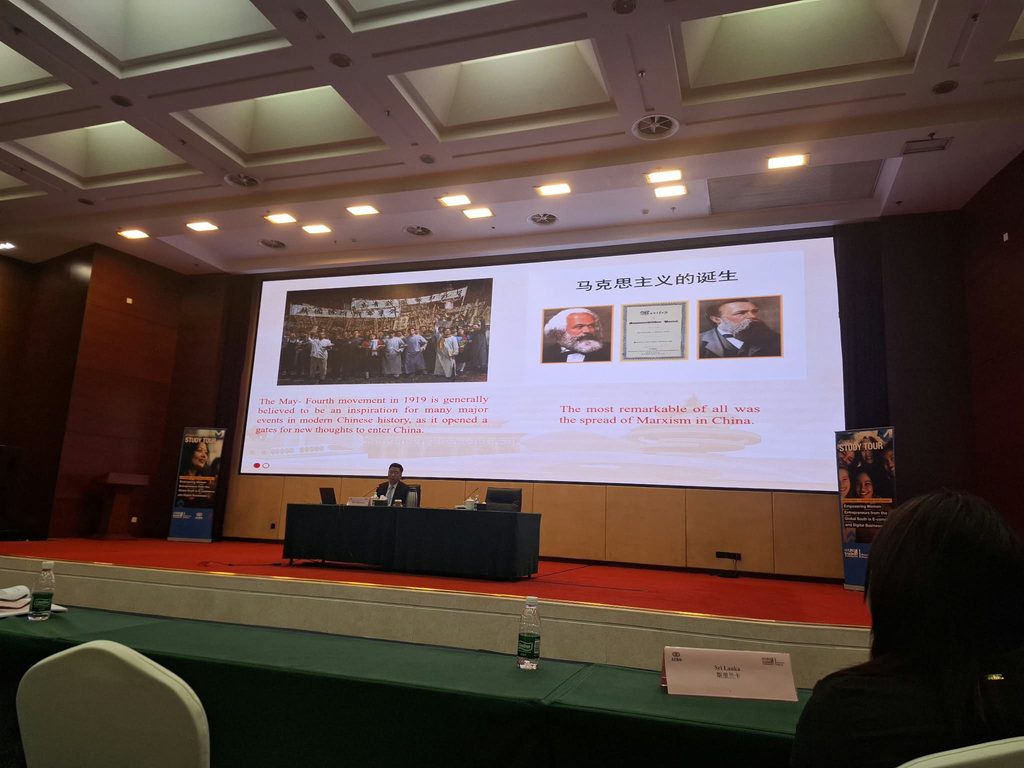
I want to give a special shout out and credit to Professor Jianchun for giving us an enriching overview of the History of China and Chinese Style Modernization during my China Study Tour Trip October 2026, this has helped me analyse a potential roadmap to the missing links of Vanuatu’s Development.
With love,
Irene