
My 10 Days 2026 China Study Tour Lessons in Digital Transformation, Manufacturing, Trade and Community Development
By Irene Abbock | Founder and Managing Director, Tidy Haus Cleaners Vanuatu | UNCTAD eTrade for Women Pacific Community Leader
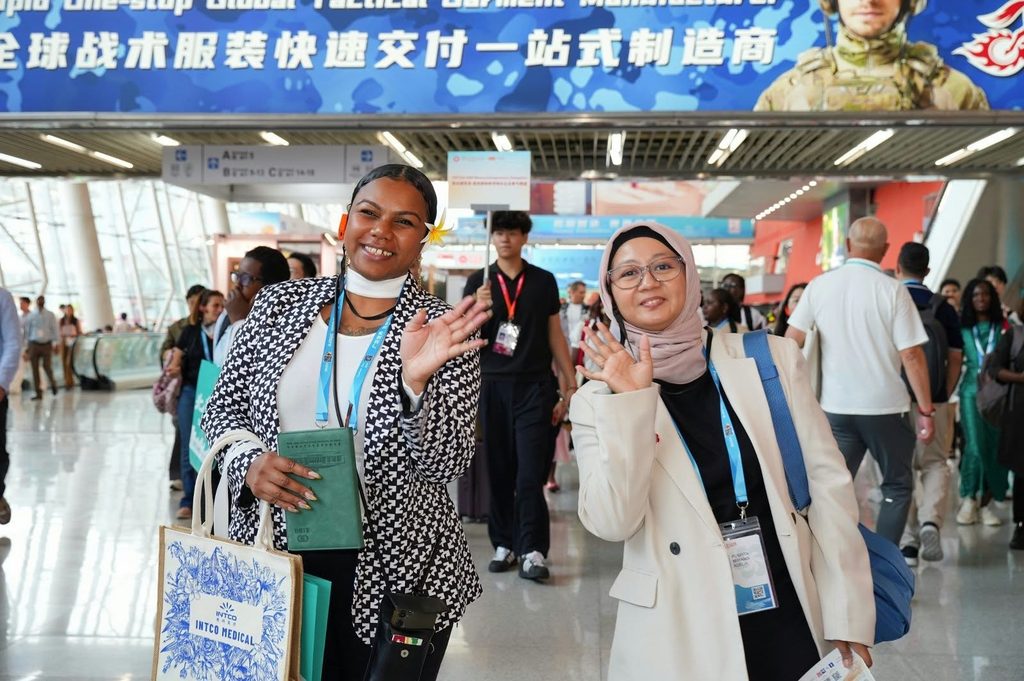
1. My journey, my business and why this opportunity mattered
My name is Irene Abbock, a ni-Vanuatu entrepreneur, founder and Managing Director of Tidy Haus Cleaners Vanuatu, a locally owned cleaning and manufacturing business established on 8 April 2024. What started as a small cleaning business, inspired by my personal experience of caring for my grandmother and recognising the importance of safer, more environmentally conscious cleaning practices, has grown into a business with a wider vision: creating local employment, developing locally made eco-friendly cleaning products and contributing to Vanuatu’s growing manufacturing sector.
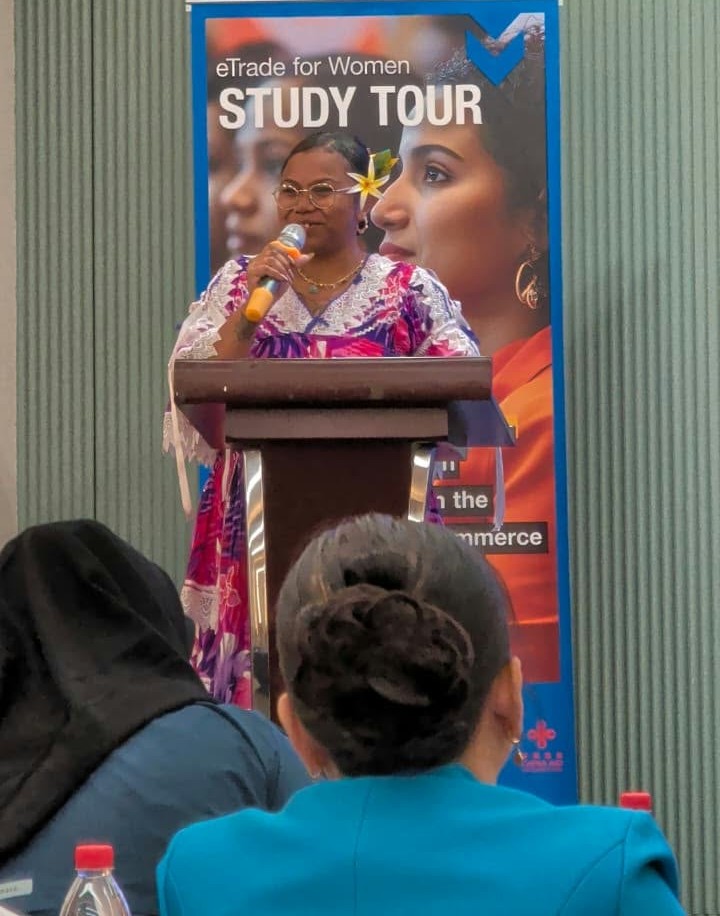
Over the past two years, my journey as an entrepreneur has extended beyond running a business. I have become increasingly involved in advocating for women in business, supporting local manufacturing, and contributing to conversations about economic development and opportunities for Pacific entrepreneurs.
In 2026, I took on the role of Manufacturing Councillor with the Vanuatu Chamber of Commerce and Industry (VCCI), contributing to discussions about strengthening our manufacturing sector, supporting local producers and creating better opportunities for businesses of different sizes. I also serve as an Advocate and Pacific Community Leader under the United Nations Conference on Trade and Development (UNCTAD) eTrade for Women initiative, where I am particularly passionate about promoting women’s participation in the digital economy and ensuring Pacific women entrepreneurs have access to knowledge, networks and opportunities beyond our own borders.
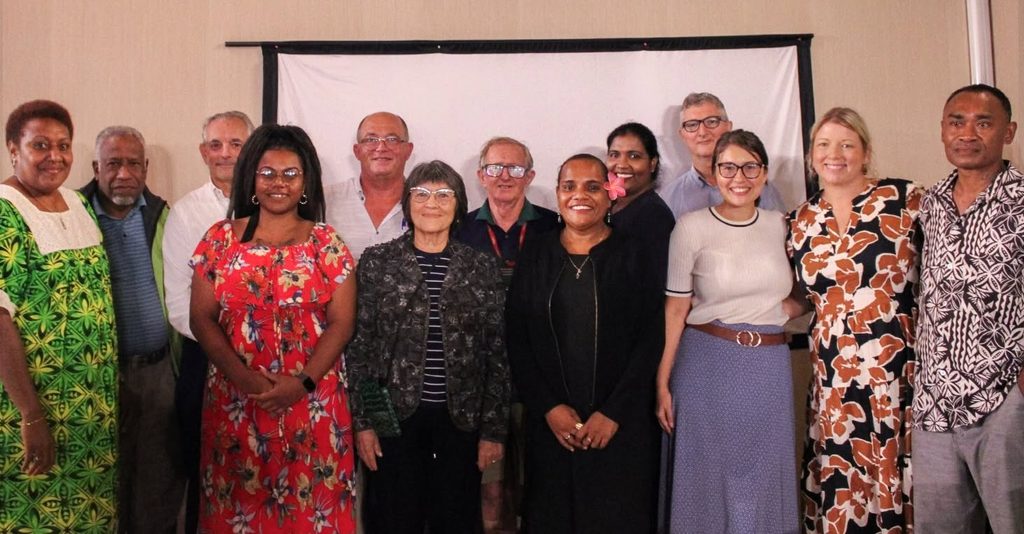
These different responsibilities have shaped the way I see business development. I no longer look at entrepreneurship simply as establishing a business, generating income or competing in the market. I see it as part of something much bigger: building an economy that creates opportunities, strengthens communities and gives future generations more choices.
It was with this mindset that I travelled to China from 26 October to 4 November 2026 to participate in the Workshop on Empowering Women Entrepreneurs from the Global South in E-commerce and Digital Businesses, sponsored by the government of the People’s Republic of China, in partnership with UNCTAD e-Trade for women, led by AIBO (Academy for International Business Officials) and held across Beijing, Guangzhou and Shenzhen.
As the first Pacific woman representative to participate in this AIBO opportunity, I felt an enormous sense of responsibility and privilege. I was not travelling only as Irene, the business owner. I was travelling as a representative of Vanuatu, the Pacific business community, women entrepreneurs and the many small, medium sized businesses across our islands that are still working towards greater economic independence.
I arrived with an open mind, ready to listen, observe, ask questions and absorb as much as possible.
What I did not expect was just how much this journey would change the way I understand economic development.
2. Understanding e-Trade for Women: More than a business network
Before reflecting on China itself, it is important to explain the initiative that brought us together.
UNCTAD’s eTrade for Women initiative is a United Nations programme designed to empower women entrepreneurs in developing countries to participate more meaningfully in the digital economy.
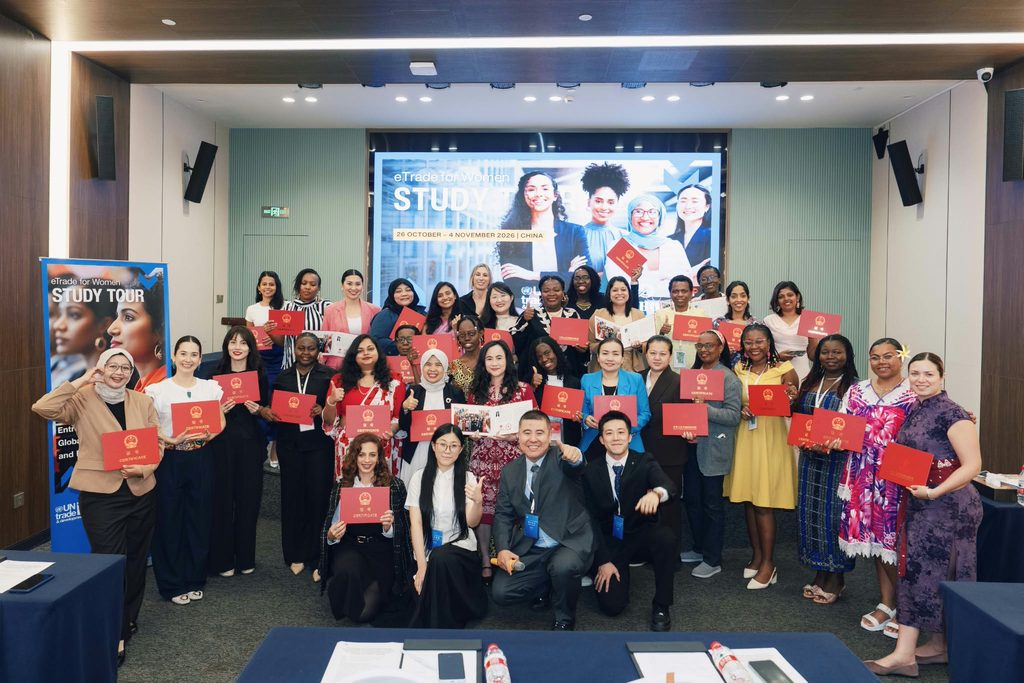
The initiative supports a growing international community of more than 500 women entrepreneurs across approximately 75 developing countries, spanning Africa, Asia-Pacific, Eastern Europe, Latin America and the Caribbean.
Its work goes beyond traditional business training. It provides:
- Capacity-building opportunities and specialised masterclasses.
- Peer learning and knowledge exchange between women entrepreneurs.
- Long-term support and international networking.
- Opportunities to develop business relationships and explore new markets.
- Advocacy for a more inclusive digital economy, led by experienced women entrepreneurs known as eTrade for Women Advocates.
The initiative recognises that women entrepreneurs need more than encouragement. They need access to knowledge, technology, financing, networks, markets and the opportunity to participate in shaping the digital economy.
For the Pacific, this is particularly important.
Many women-led businesses across our islands operate in small markets, face geographical limitations and have restricted access to international business networks. Digital commerce creates opportunities to overcome some of these barriers, but only when women have the knowledge, infrastructure and support to participate.
As part of this wider community, I have had the privilege of connecting with women who are not only building successful businesses but also using their experiences to advocate for other women.
During my journey, I also had the opportunity to connect with Angeline in Manila, an eTrade for Women Advocate during our Masterclass in Philippines 2025, and Diane in China, one of the first few advocates associated with the organisation, who also shared her experience and initiated the Growing Girlfriend – Growing & Glowing eTrade for women.

These connections reminded me that entrepreneurship does not have to be a lonely journey. When women share their knowledge, experiences and networks, opportunities can extend far beyond their individual businesses.
The China study tour brought this philosophy to life.
3. The opportunity: Learning from China through AIBO
The programme was hosted by the Ministry of Commerce of the People’s Republic of China and co-hosted by the Academy for International Business Officials (AIBO).
AIBO, also known as the Training Centre of the Ministry of Commerce, is an educational and training institution affiliated with China’s Ministry of Commerce.
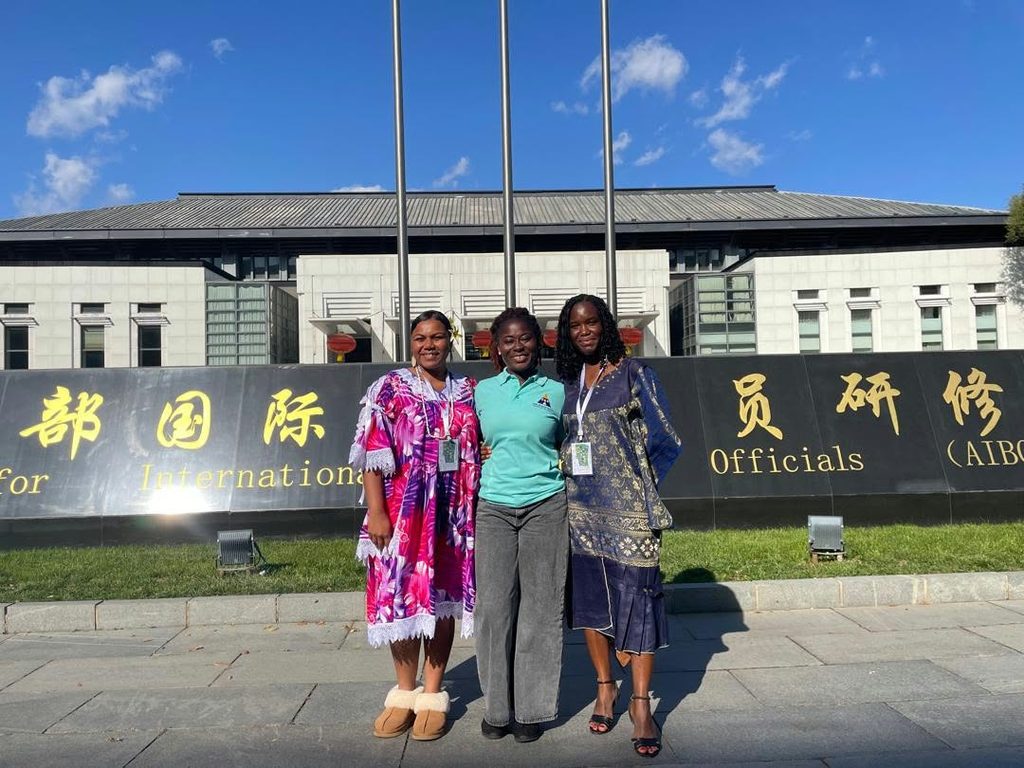
According to the programme guidebook, AIBO has organised seminars and workshops for officials from developing countries since 1998. By the end of 2024, it had conducted more than 2,500 seminars and workshops and welcomed more than 75,000 officials from 160 countries and regions.
Its programmes cover a wide range of subjects, including governance, economic administration, trade and investment, transportation, port management, logistics, natural resource development, international labour cooperation and clean energy.
For me, this was particularly significant.
It was an opportunity to learn from an institution that has spent decades facilitating international knowledge exchange and cooperation.
Over ten days, we travelled through three major Chinese cities, each offering a different perspective on the country’s development.
We explored digital commerce, manufacturing, artificial intelligence, international trade, logistics, technology, community development and innovation.
And we did so alongside women entrepreneurs from different countries, industries and backgrounds.
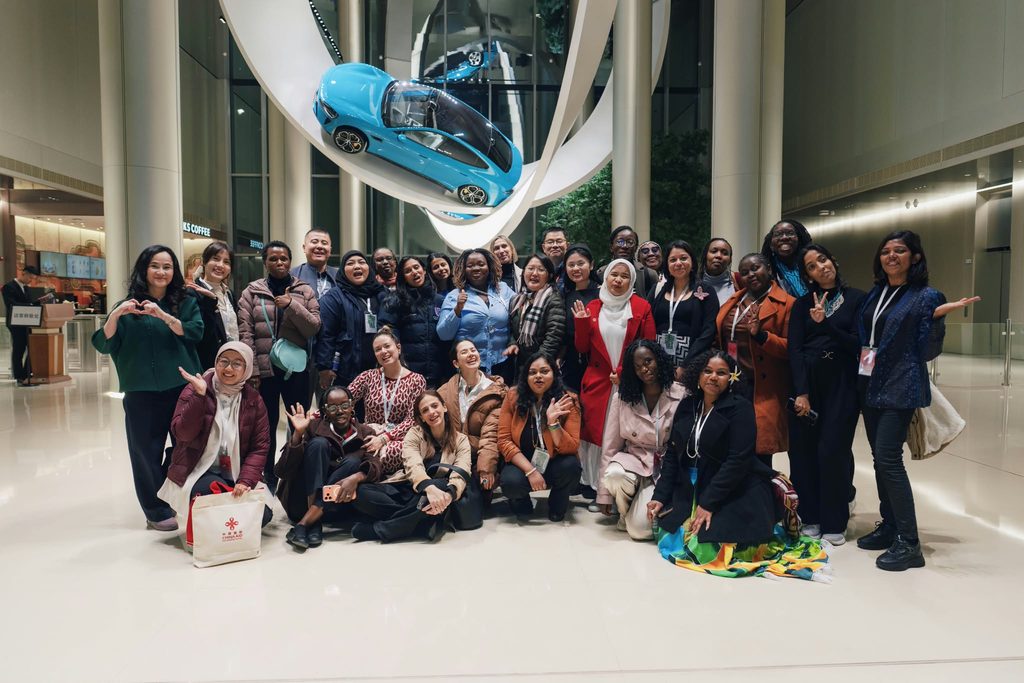
4. Ten days in China: From Beijing to Guangzhou and Shenzhen
DAY 1 – 26 October | Beijing: Understanding China’s development journey
Our journey began in Beijing with programme briefings, introductions, an icebreaker and the official opening ceremony.
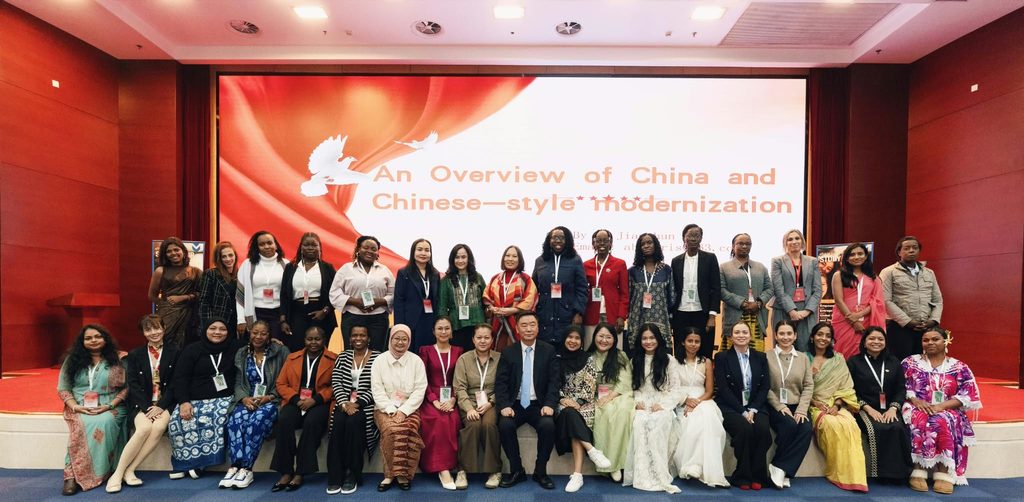
The first major lecture was an overview of China’s national conditions and Chinese-style modernisation, presented by Professor Jianchun.
This was an important starting point because, before understanding China’s digital economy, it was necessary to understand the wider development journey behind it.
We explored China’s history, its economic transformation and the role of modernisation in shaping its national development.
One of the things I found particularly interesting was understanding that China’s development was not built around one industry or one technological breakthrough. It involved long-term changes across agriculture, infrastructure, manufacturing, energy, education, workforce development and economic policy.
It made me reflect on Vanuatu’s own development journey.
We often talk about economic growth, investment and business opportunities, but we must also ask ourselves what foundations we are building to support that growth.
Are our policies strong enough? Are we investing in local production? Are we developing the skills of our people? Are we creating opportunities for businesses to grow beyond their immediate communities?
These were some of the questions I carried with me throughout the tour.
DAY 2 – 27 October | Kuaishou and the Great Wall
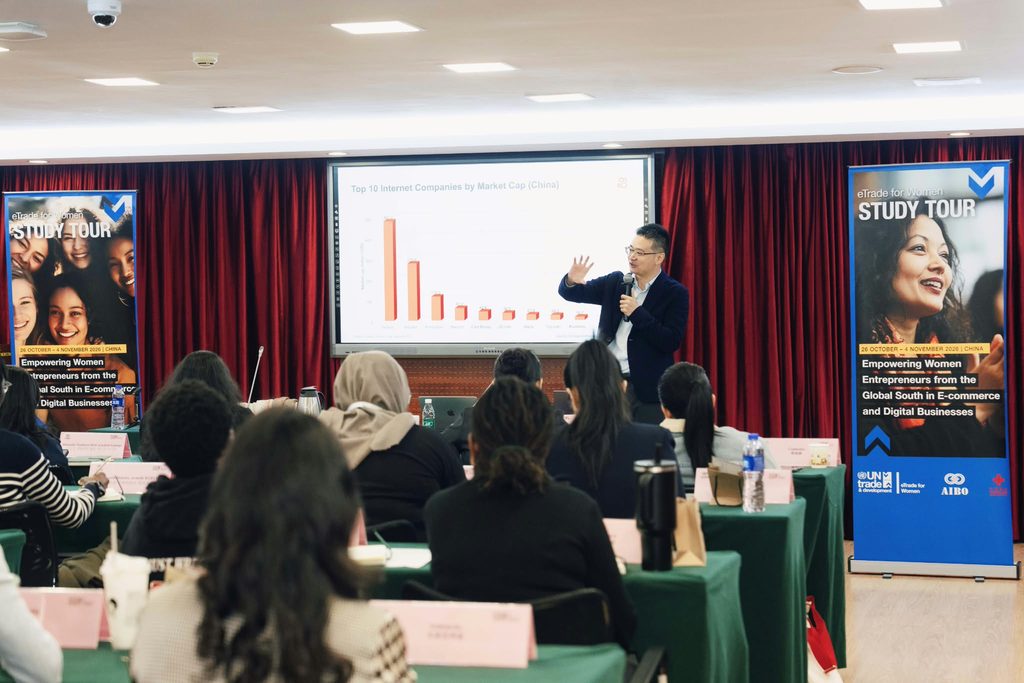
Our second day focused on short-form video and livestream e-commerce through a session with Kuaishou.
We learned about digital marketing, livestream selling and how small and medium-sized enterprises can use digital platforms to reach customers and expand their markets.
What stood out to me was how digital platforms have become part of the commercial ecosystem.
Selling products is no longer limited to having a physical shop, waiting for customers to walk through the door or relying entirely on traditional advertising.
Through video content, livestreaming and digital engagement, businesses can introduce products, communicate with customers and reach audiences in different locations.
For small businesses, this presents enormous opportunities.
For a business like Tidy Haus, it made me think about how we can further develop our online presence, showcase both our cleaning services and our locally manufactured cleaning products and reach customers beyond our immediate market.
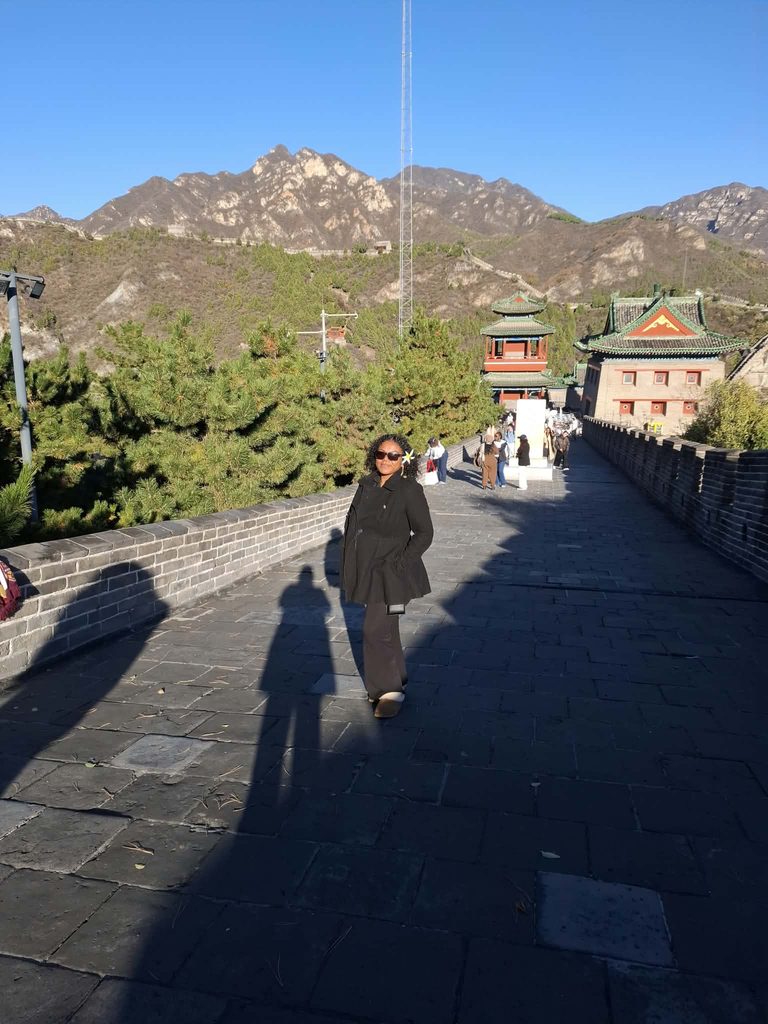
In the afternoon, we visited the Great Wall of China.
Standing on one of the world’s most recognised historical structures was a memorable experience. Beyond its physical scale, it was a reminder of the importance of vision, planning, collective effort and building something that can endure across generations.
DAY 3 – 28 October | JD.com and DHgate: Seeing the future of commerce
This was one of the most memorable days of the entire study tour.
We visited JD.com, one of China’s major technology-driven retail and logistics companies.
For the first time in my life, I witnessed what I would describe as the digital industrial revolution of the future.
I saw robotics and automation being used in industrial and logistics operations, changing the way products are processed, handled and delivered.
What particularly fascinated me was seeing how a large, multi-billion-dollar business could operate with a remarkably small group of engineers overseeing advanced technological systems.
I remember reflecting on the contrast: fewer than 20 engineers in the environment we observed, alongside technology supporting operations at an enormous scale.
It made me realise that the future of business is not simply about hard physical labour for humanity to perform repetitive tasks. It is increasingly about how people, technology, data and systems work together.
JD.com’s development also demonstrated the importance of supply chains.
It is not just an online shopping platform. Its business model brings together retail, logistics, technology and other services, showing how different parts of the commercial process can operate as an integrated system.
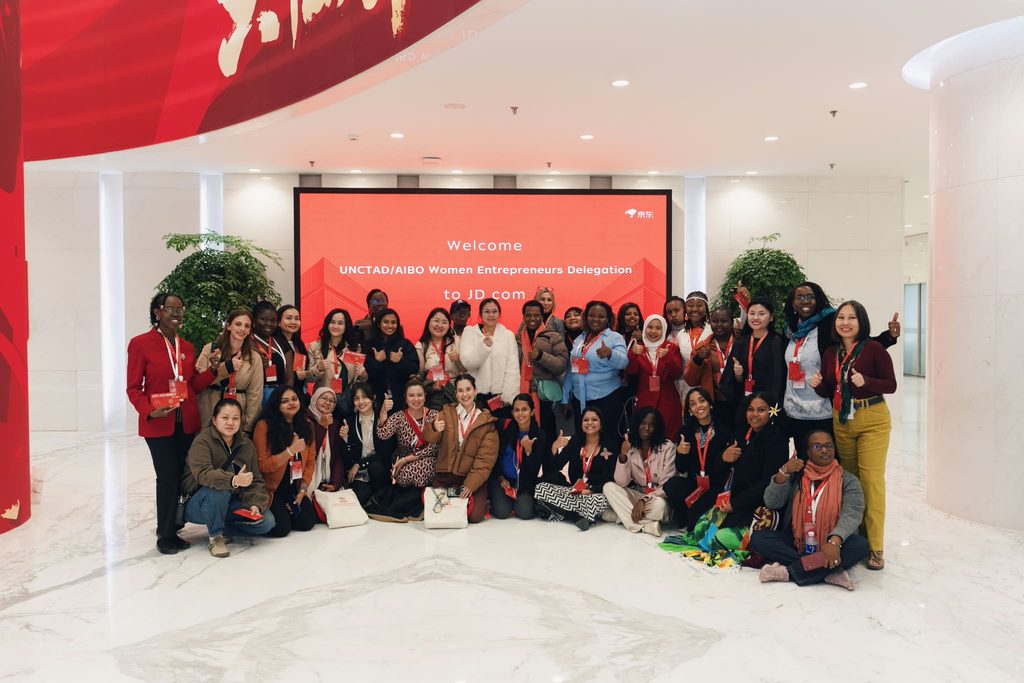
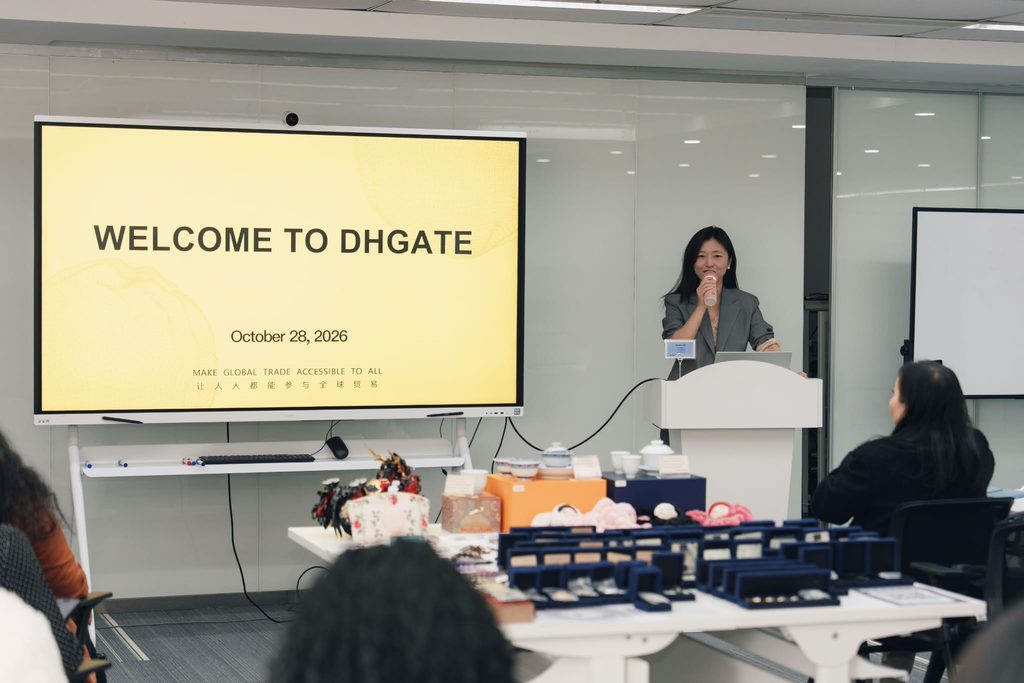
We also visited DHgate, a major business-to-business cross-border e-commerce marketplace connecting international buyers with Chinese suppliers.
This was another important learning experience.
DHgate demonstrated how digital platforms can connect businesses directly with suppliers and manufacturers, opening opportunities for international sourcing and trade.
For Pacific businesses, this raises important questions:
How can our local businesses source more efficiently? How can we identify reliable suppliers? How can we use digital platforms to access international markets? And how can we move beyond simply importing finished products towards developing our own locally made products?
The day helped me see that digital commerce and physical supply chains cannot be separated. They must work together.
DAY 4 – 29 October | Cross-border e-commerce and trade facilitation
Our fourth day began with a lecture on trade facilitation for cross-border e-commerce, delivered by a former Chinese customs official.
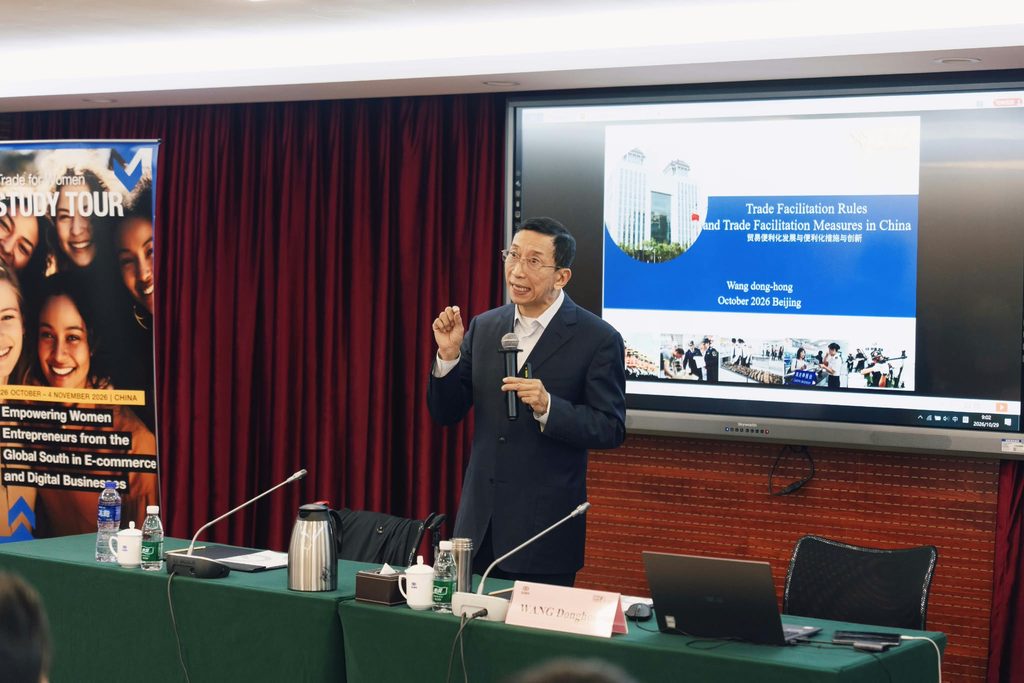
This was one of the most relevant policy discussions for my work as both an entrepreneur and a manufacturing advocate.
Digital trade is not only about having a website or an online selling platform.
Behind every successful international transaction are systems that make trade possible: customs processes, documentation, import and export regulations, payment systems, logistics, standards and regulatory cooperation.
If businesses are expected to trade internationally, the policies and processes surrounding trade must also support them.
For countries like Vanuatu, this is an area that deserves greater attention.
We need policies that encourage businesses to participate in digital trade, but we also need to ensure those policies are properly implemented.
Having a policy document is only the beginning. What matters is whether it creates practical improvements for businesses and whether the systems are accessible, efficient and affordable.
In the afternoon, we departed Beijing and travelled to Guangzhou.
DAY 5 – 30 October | Guangzhou Tungee Technology and artificial intelligence
Our fifth day introduced us to Guangzhou’s technology and artificial intelligence ecosystem through a visit to Guangzhou Tungee Technology.
Tungee demonstrated how artificial intelligence and big data can support business development, sales, customer engagement and market research.
One particularly interesting aspect was its use of AI-powered sales agents and large databases to help businesses identify potential customers, understand markets and improve sales processes.
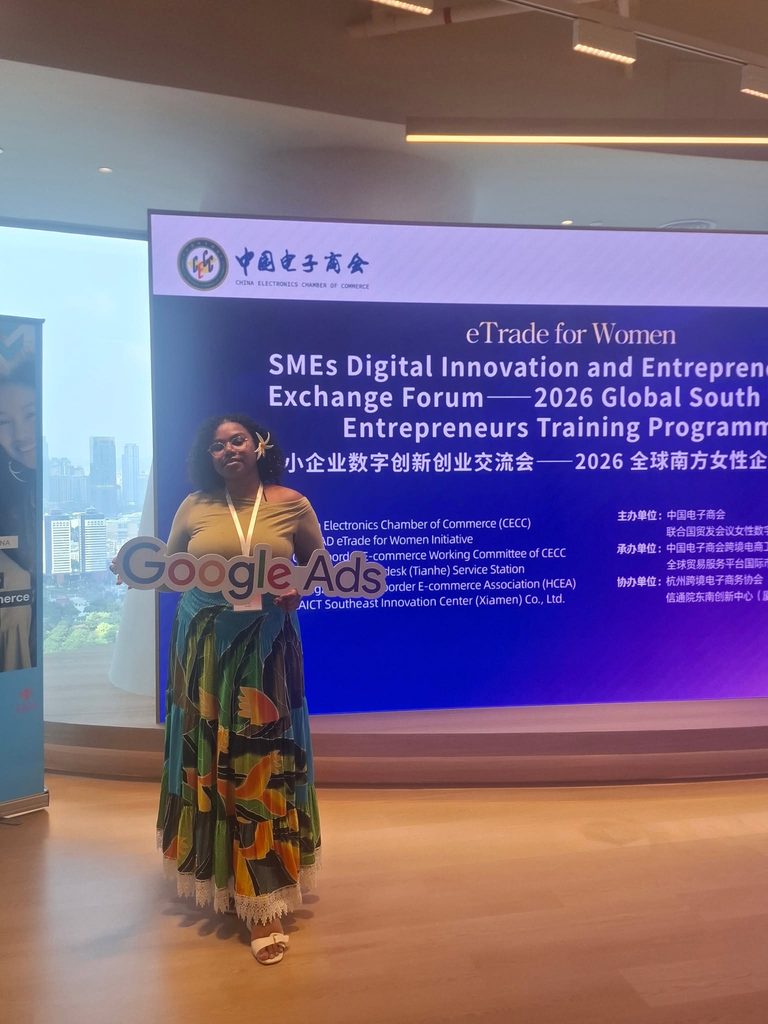
For small businesses, this raises interesting possibilities.
Artificial intelligence is no longer something that only large technology companies can explore. It is increasingly becoming a tool that can support everyday business operations.
Imagine local businesses being able to use AI to identify potential customers, improve marketing, manage enquiries, analyse sales trends and make better business decisions.
In the afternoon, we participated in an exchange session with local enterprises working in e-commerce and artificial intelligence, facilitated by the China Electronics Chamber of Commerce.
This was valuable because it allowed us to move beyond observing technology and begin understanding how businesses are applying it commercially.
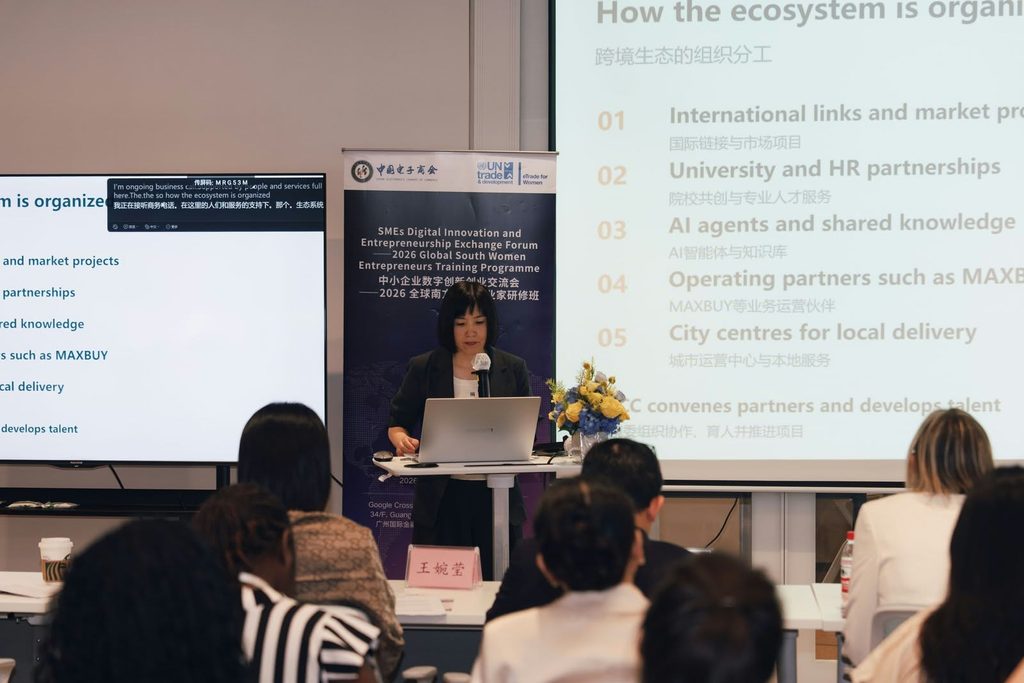
My takeaway was simple: technology becomes valuable when it solves real business problems.
DAY 6 – 31 October | Canton Fair, Jingxia Village and the Pearl River
Our sixth day brought together international trade, traditional knowledge, community development and culture.
We began with a visit to the Liuhua Exhibition Hall, an important historic venue associated with the Canton Fair.
We also had the opportunity to experience traditional Chinese medicine as part of the programme.
Later, we visited Jingxia Village in Guangzhou.
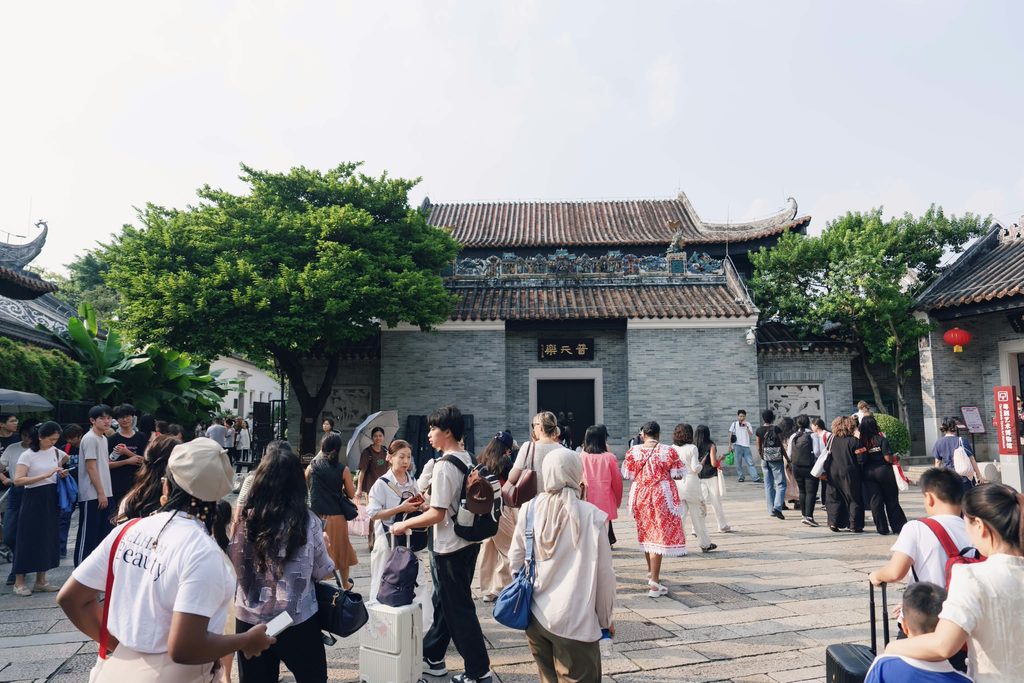
This visit became one of my most meaningful observations because it demonstrated how economic development can be connected directly to the wellbeing of a community.
Jingxia Village was once a rural community facing challenges associated with infrastructure, drainage and limited collective income.
Through land consolidation, improved infrastructure, new industries, environmental projects and cultural development, the village underwent a significant transformation.
The programme guidebook highlighted that the village’s collective income increased from less than RMB 20,000 in 2016 to more than RMB 13.37 million in 2025.
It also described its investment in water systems, greenways, rooftop solar panels and local cultural facilities.
What interested me was not simply the amount of money generated.
It was the idea that development could transform the living environment, create new economic activities and improve the opportunities available to the people living within that community.
This is something we should reflect on in Vanuatu.
Economic development should not only be measured by national GDP, the number of businesses established or the amount of foreign investment attracted.
It should also be measured by whether people have better livelihoods, whether communities have stronger economic opportunities and whether development is reaching beyond major urban centres.
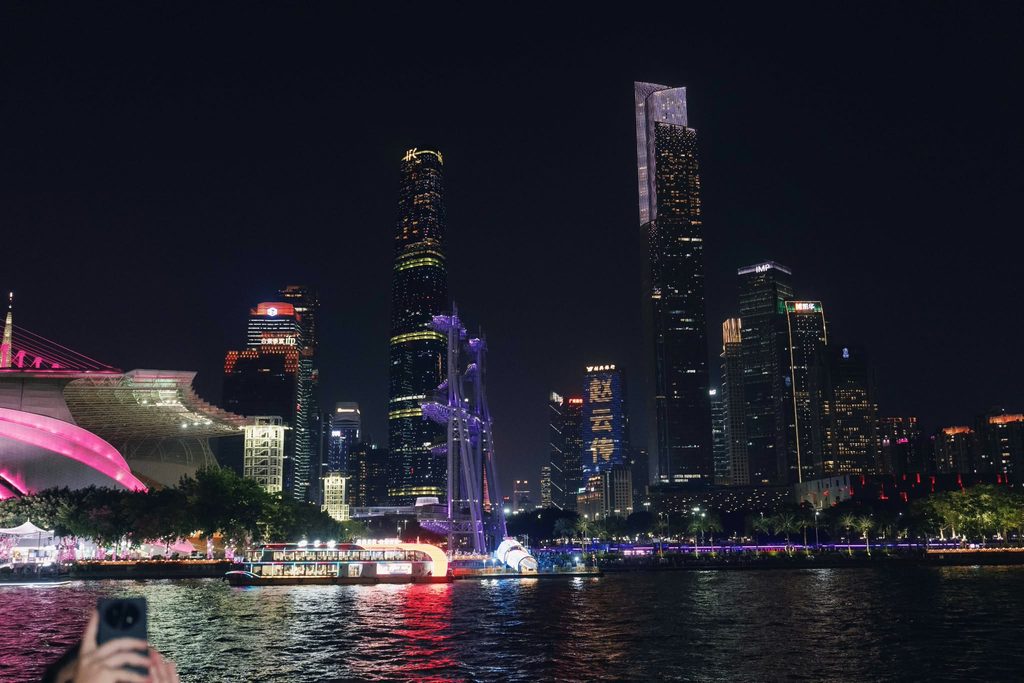
In the evening, we experienced the Pearl River night cruise, seeing Guangzhou’s illuminated skyline and its combination of historical and modern development.
DAY 7 – 1 November | The Canton Fair: A global marketplace
One of the biggest highlights of my entire China study tour was attending the Canton Fair, officially known as the China Import and Export Fair.
The Canton Fair has been held in Guangzhou since 1957 and is one of the world’s major international trade exhibitions.
Walking through the exhibition areas gave me a much greater appreciation of the scale of China’s manufacturing and trading ecosystem.
The exhibition brought together businesses, manufacturers, products, technologies and international buyers across different industries.
We explored the industrial exhibition areas, smart healthcare zone, trade-in-services displays and product innovation showcases. We also attended the Phase III Canton Fair Forum.
What struck me was the opportunity for businesses to see products, compare suppliers, understand manufacturing capabilities and establish international connections in one place.
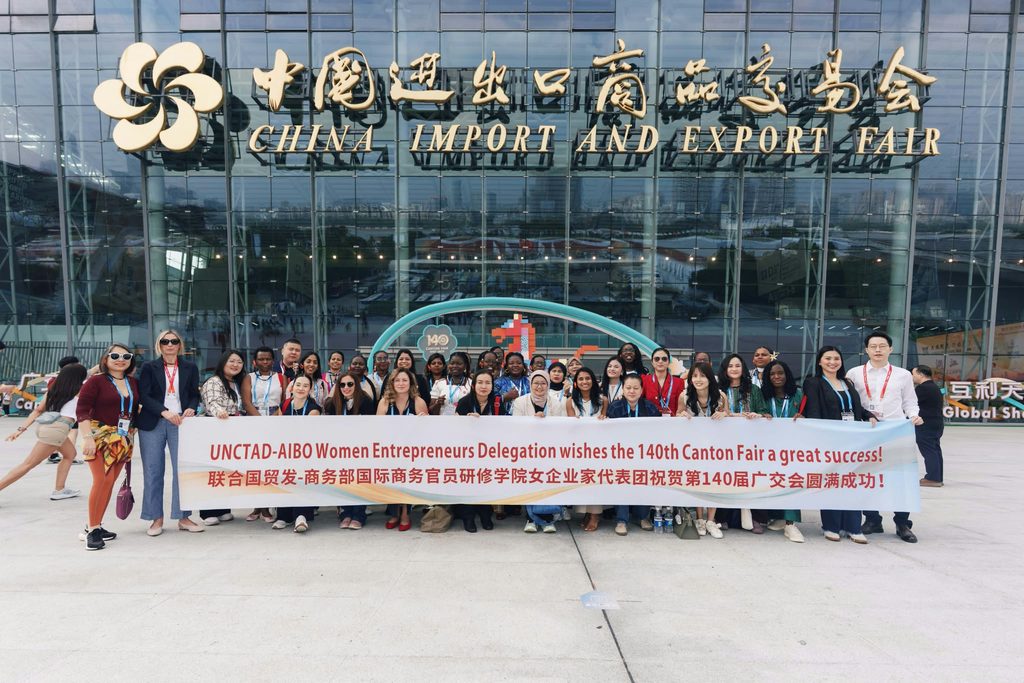
For me, attending the Canton Fair was more than simply seeing products.
It was an opportunity to understand how a country connects manufacturing with international trade.
It also made me think about the potential for Vanuatu and the Pacific.
We have our own products, natural resources, agricultural industries, cultural products and emerging manufacturers. But how do we connect these businesses to international buyers? How do we improve product quality, packaging, branding and production capacity? How do we create more opportunities for Pacific-made products to enter international markets?
The Canton Fair reminded me that international trade requires preparation.
Businesses need to understand their products, their production capacity, their target markets and the standards required to compete.
For Vanuatu, we must also think about how we can position ourselves not only as consumers of imported products but as producers and exporters of goods with value added locally.
DAY 8 – 2 November | Shenzhen and Huaqiangbei Electronics Market
We departed Guangzhou and travelled to Shenzhen, another major centre of China’s technology and manufacturing development.
Our afternoon visit was to Huaqiangbei Electronics Market.
This was a fascinating experience because the district is not simply one electronics shop or exhibition hall. It is a large commercial ecosystem where suppliers, traders, component sellers, designers and businesses operate close to one another.
It gave us an opportunity to understand how concentrated supplier networks can support product development and manufacturing.
Businesses can source components, compare products, identify suppliers and explore possibilities for new products within a connected commercial environment.
This is another lesson that resonated with me.
A strong manufacturing sector does not exist in isolation. It relies on the businesses, suppliers, logistics providers, technical services and supporting industries around it.
For smaller economies like Vanuatu, strengthening our own domestic supply chains and improving connections between local producers, processors, manufacturers and buyers will be essential.
DAY 9 – 3 November | Tencent, DJI Enterprise and women supporting women
Our ninth day brought us to two major technology companies in Shenzhen.
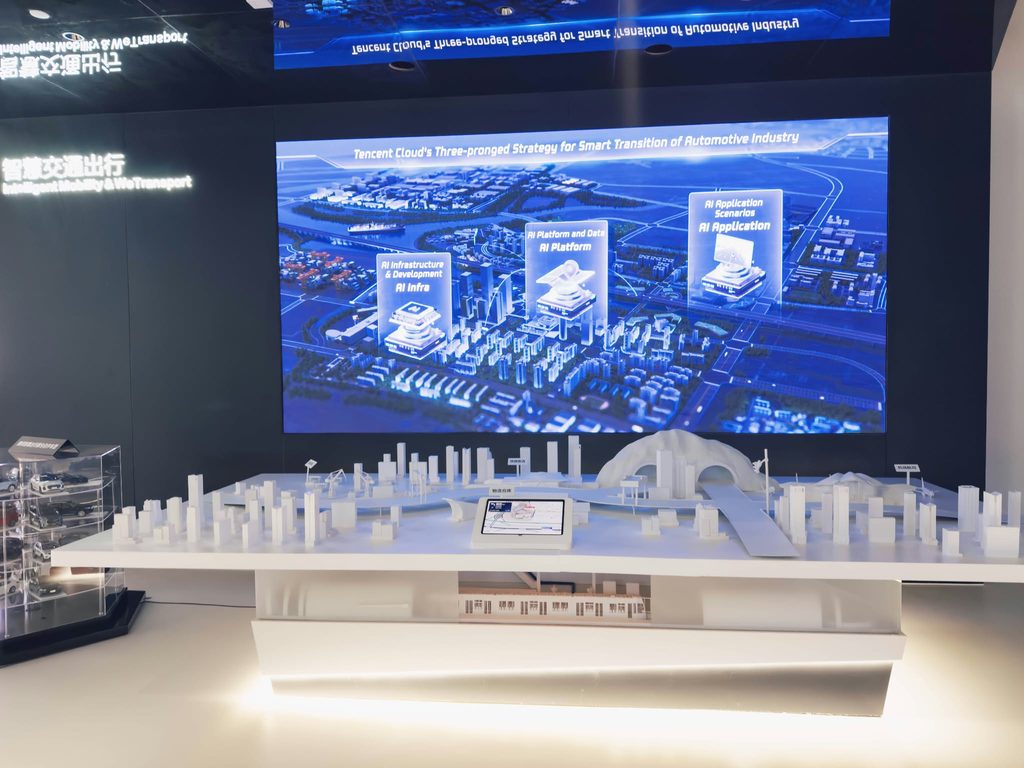
In the morning, we visited Tencent, one of China’s leading internet and technology companies.
The visit provided an insight into how digital platforms, communications, financial technology, cloud services and enterprise solutions can support modern businesses and everyday life.
It reinforced the importance of digital infrastructure and the role technology companies play in creating interconnected business ecosystems.
In the afternoon, we visited DJI Enterprise.
DJI’s technology demonstrates how drones and aerial-data solutions can be applied across industries, including agriculture, infrastructure inspection, surveying, public safety and emergency response.
For island countries like Vanuatu, these technologies present interesting possibilities.
We have challenging geographical conditions, remote communities, difficult terrain and exposure to natural disasters. Technologies that support mapping, monitoring, infrastructure assessment and emergency response could have practical applications in our own development.
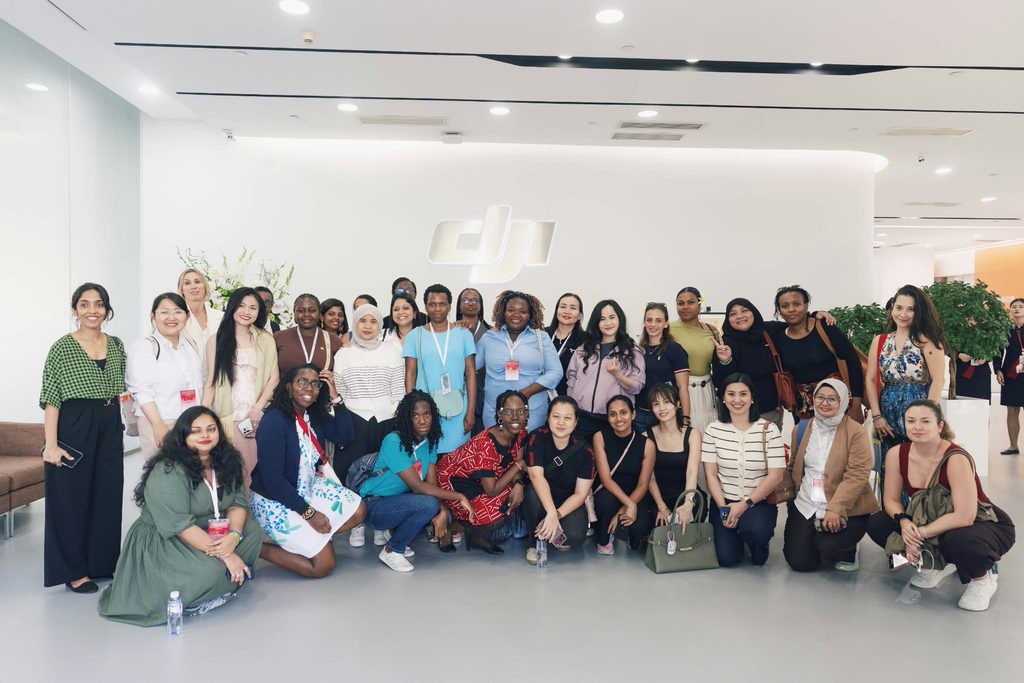
The day concluded with dinner alongside a former eTrade for Women Advocate.
This was particularly meaningful because it brought us back to the purpose of the programme: women supporting women, sharing experiences and creating opportunities beyond individual businesses.
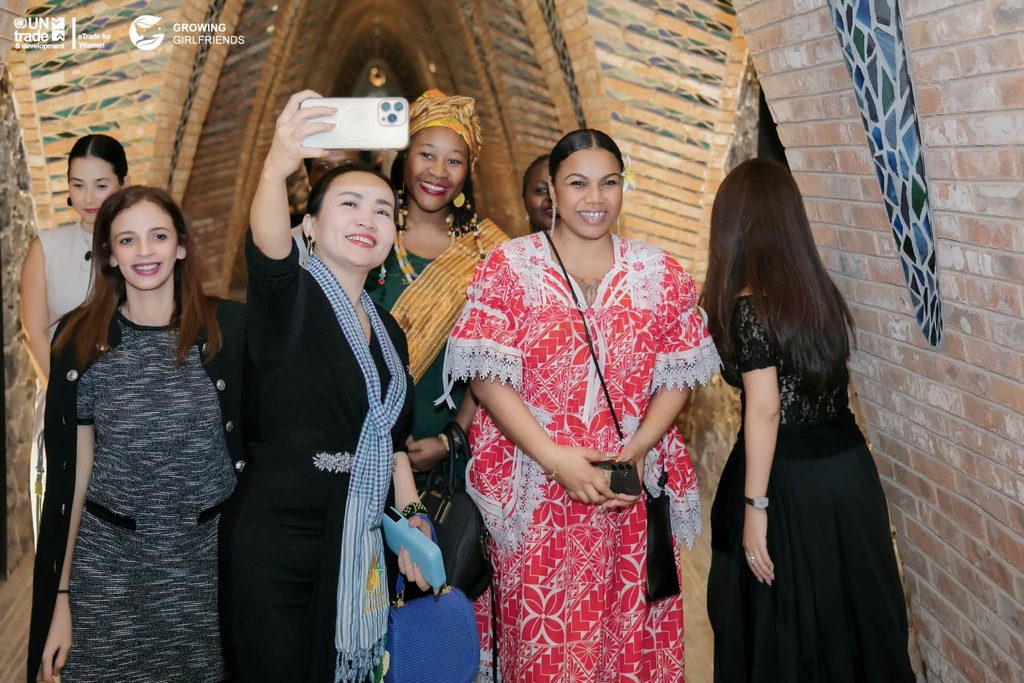
Meeting and connecting with women who have walked similar entrepreneurial journeys reminded me that international networks are valuable not only for business transactions but also for mentorship, advocacy and long-term collaboration.
DAY 10 – 4 November | Reflection, closing ceremony and new beginnings
Our final day was dedicated to reviewing what we had learned, completing the programme evaluation and participating in the closing ceremony.
By this stage, the experience had become much more than a series of lectures and company visits.
We had travelled through three cities, experienced different aspects of China’s development, shared ideas and exchanged experiences with women from around the world.
During the closing ceremony, I also had the privilege of delivering a personal speech on behalf of the journey we had shared.
I spoke about how we had arrived as women entrepreneurs from different countries, cultures and backgrounds, but were leaving with something much deeper than professional connections.
We had become friends, sisters and a community.
I also expressed my gratitude to UNCTAD, the Chinese Government, our hosts and the AIBO team for making this experience possible.
But most importantly, I reflected on what we could do with everything we had learned.
I did not want the study tour to end when we boarded our flights home.
I wanted it to become the beginning of continued relationships, partnerships and opportunities.
Day 10 — 4 November: Closing a chapter, opening new possibilities
Our final day included a learning review, questionnaire, closing ceremony and farewell luncheon.
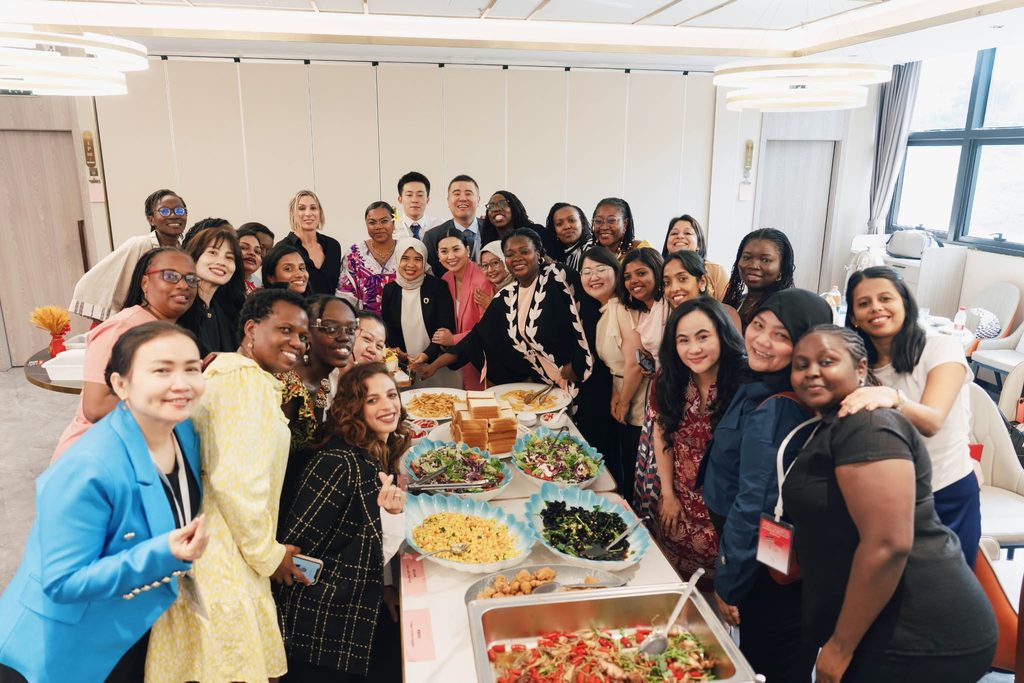
As I reflected on the ten days, I realised that I had arrived in China expecting to learn about e-commerce and digital business. I was leaving with a much broader understanding of how technology, infrastructure, manufacturing, logistics, policy, community development and international partnerships all connect.
But perhaps the most meaningful part of the experience was the people.
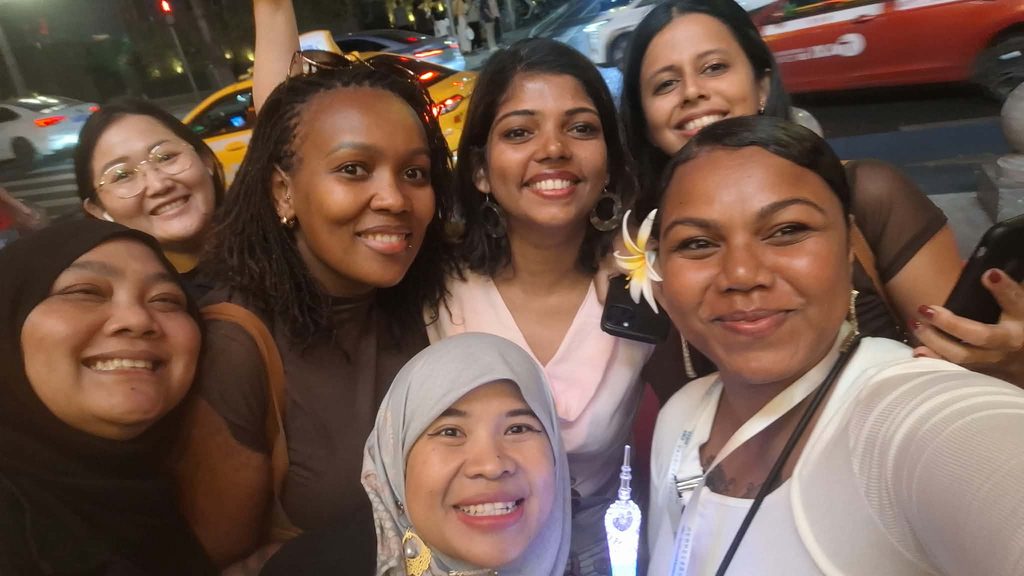
We arrived as women entrepreneurs from different countries, cultures, languages and backgrounds. Over ten days, we shared meals, stories, laughter, experiences, photographs, shopping trips, bus conversations and even moments of getting lost together in China.
What started as a professional learning programme became something much deeper.
We built friendships and a sense of sisterhood. We learned from one another, celebrated one another and discovered that although our businesses and countries may be different, many of the challenges we face as women entrepreneurs are remarkably similar.
I am grateful to the UNCTAD team, particularly Sabrina, and to the AIBO team — Mr Pascal, Yang, Wu, Gloiing, Shelley and Cami for their guidance, organisation and support throughout the programme. I am also grateful to the Chinese Government, the Ministry of Commerce and everyone who contributed to making this opportunity possible.
I left with new knowledge, new relationships and a much bigger world in my heart.
What China taught me and what we can take back to Vanuatu
It would be easy to return from a country like China and focus only on its scale, technology and infrastructure. But I believe the more important question is: what can we realistically learn from this experience and apply to our own circumstances?
China’s development journey is different from ours. Its population, geography, industrial capacity, financial resources and governance systems are not comparable to those of Vanuatu.
We should not try to copy China.
Instead, we should identify the principles that are relevant to us and adapt them to our own needs, strengths and limitations.
Three lessons stood out to me.
1. We need to connect our policies with practical implementation
One of my biggest takeaways was that digital transformation is not simply about having technology. It requires a supportive environment, clear direction, investment, coordination and practical implementation.
A country can have strategies, policies and development plans, but businesses and communities need to experience the benefits.
For example, if we want more Ni-Vanuatu businesses to sell online, we need more than digital awareness workshops. We need businesses to have access to reliable internet, digital skills, secure payment options, affordable finance, suitable delivery services and clear rules that protect both buyers and sellers.
We also need stronger connections between government, the private sector, financial institutions, development partners, educational institutions and business organisations.
The focus should be on understanding what is already in place, identifying where implementation is falling behind and working together to address those gaps.
2. We need to strengthen local production and our supply chains
Vanuatu has many resources and opportunities, but we continue to rely heavily on imported goods, food, fuel, machinery and manufactured products.
We export valuable natural resources, but there is still significant potential to increase local processing, manufacturing, packaging and value addition.
We need to look at how we can build stronger connections between our farmers, producers, manufacturers, transport operators, retailers and export markets.
This also means strengthening our inter-island supply chains.
For an island nation, reliable and affordable shipping is not just a transport issue. It is an economic development issue.
If products cannot move efficiently between islands, farmers and local producers may struggle to reach larger markets. Businesses may face higher costs, delays and unnecessary waste. Communities may have resources but limited opportunities to turn them into income.
Improving inter-island shipping routes, freight services, storage, port facilities and connections to domestic and international markets should therefore be part of our broader economic development conversation.
Digital systems can help coordinate orders, stock, payments and logistics, but they must be supported by physical infrastructure that works.
3. Development must create opportunities for our people and communities
The visit to Jingxia Village reminded me that development should improve people’s lives, not only business performance.
In Vanuatu, we need to make sure that local communities, women, young people and rural businesses are included in economic opportunities.
We need more opportunities for practical training, entrepreneurship, technical skills, access to finance and market participation.
We should also recognise that our customary landowners, farmers, fishers, artisans and community producers are important contributors to our economy.
The question should not only be how to attract investment, but how to make sure our people can participate in the opportunities that investment creates.
Building on the work already underway: UNCTAD and the Pacific digital economy
One important reflection from my trip is that the Pacific is not starting from zero when it comes to digital trade and e-commerce.
There is already significant work underway, including through UNCTAD and its development partners. We need to build on this foundation, connect the different initiatives and focus on practical implementation.
UNCTAD’s Digital Economy Report: Pacific Edition 2024 — Promoting Digital Entrepreneurship and Trade is an important example. The report examines the relationship between digital connectivity, entrepreneurship and trade, and highlights the opportunities and challenges facing Pacific Small Island Developing States.
It recognises that digital connectivity is fundamental, but access alone is not enough. Businesses also need the skills, finance, tools and enabling environment to participate in the digital economy.
The report highlights several issues that are particularly relevant to our region:
- Digital connectivity: Internet access, affordability and reliable infrastructure remain important challenges, especially for communities outside major urban centres.
- Digital entrepreneurship: Digital platforms create opportunities for small businesses to reach wider markets, but gaps in digital skills, finance and literacy can limit participation.
- Women entrepreneurs: Women need better access to tailored finance, digital tools, skills development and mentorship.
- Digital trade: Cross-border e-commerce and digitally delivered services offer opportunities for economic diversification, but logistics, payment systems and regulatory barriers can make participation difficult.
- Regional cooperation: Pacific countries can benefit from coordinated approaches rather than working in isolation.
This work is also supported through the Pacific Digital Economy Programme, a joint programme of UNCTAD, the United Nations Capital Development Fund (UNCDF) and the United Nations Development Programme (UNDP), working with regional and national stakeholders.
The programme supports inclusive digital economy development through regional research, capacity building and country-specific technical assistance. Vanuatu is among the countries included in its work, alongside other Pacific countries.
For me, this is important because it shows that the conversations we are having about digital transformation are already connected to wider regional efforts.
The opportunity now is to make sure that these initiatives reach the people and businesses they are intended to support.
We need to connect regional policy discussions with the experiences of local businesses. We need to make sure that women entrepreneurs, small manufacturers, farmers, tourism operators, young people and community businesses have a voice in identifying what support is actually needed.
The China study tour gave me practical examples of how technology and business systems can work. UNCTAD’s Pacific work provides an important regional foundation for considering how those lessons could be adapted to our own circumstances.
These two areas should complement each other.
What is already in place in Vanuatu and where can we go next?
Looking at Vanuatu, I believe we need to acknowledge the work and policy foundations that already exist.
We already have a national e-commerce strategy, digital policies, trade frameworks and more recent legislation that provide a starting point for strengthening our digital economy.
For example, Vanuatu’s E-Commerce Strategy and Roadmap 2022 identifies seven priority areas:
- E-commerce readiness and strategy formulation.
- ICT infrastructure and services.
- Trade logistics and trade facilitation.
- Legal and regulatory framework.
- Electronic payment solutions.
- E-commerce skill development.
- Access to finance for e-commerce.
When I look at these priorities, I see many of the same issues that came up during our China study tour.
We can learn about online marketing, artificial intelligence, automation and digital platforms, but those tools will only have a meaningful impact if our businesses can access reliable infrastructure, finance, payments, logistics and practical training.
Vanuatu also has existing foundations in its National ICT Policy, Universal Access Policy and Cybersecurity Policy. The Department of Communications and Digital Transformation has indicated that these policies are undergoing review.
More recently, Vanuatu has taken further steps through legislation and digital governance initiatives, including the Digital Transformation Act No. 42 of 2025, the Cybercrime Act No. 22 of 2021 and the Data Protection and Privacy Act No. 13 of 2024. Other digital safety and cybersecurity frameworks are also part of the country’s evolving digital environment.
Another important development is the completion of Vanuatu’s National E-commerce Legislative Gap Analysis in May 2026, with support from the Commonwealth Secretariat. The analysis reviews the existing legal environment and identifies priority areas for strengthening the framework, including electronic transactions, data protection, cybersecurity, consumer protection and telecommunications.
I believe this is an important step.
It shows that work is already happening to identify what needs to be improved so that businesses and consumers can have greater confidence in online transactions and digital services.
I am not writing this as a legal or policy expert. I am looking at it from the perspective of a business owner who wants to understand how these frameworks can translate into real opportunities.
What I would like to see is stronger coordination between the policies and the people expected to benefit from them.
For example:
- How do we help a small business actually use the e-commerce strategy to start selling online?
- How do we make digital payments more accessible and affordable for small businesses?
- How can women entrepreneurs access practical digital training and financing?
- How do we help local manufacturers and producers promote and sell their products beyond Vanuatu?
- How can customs, shipping and logistics processes become easier for small exporters?
- How do we ensure businesses outside Port Vila and Efate are not left behind?
- How do we build trust in online transactions and protect consumers and businesses?
These are practical questions that deserve attention.
My view is that we do not need to keep reinventing the wheel. We need to review what has already been developed, understand what is being implemented, identify the gaps and agree on who needs to work together to move things forward.
The challenge is not simply creating more policies. It is making sure the policies we already have translate into opportunities, services and measurable improvements for our people.
Opportunities for women entrepreneurs and Pacific businesses
One of the strongest messages I took away from the programme is that women entrepreneurs need to be included in the digital economy as business owners, employers, producers, innovators and decision-makers.
Across the Pacific, women are already operating businesses in agriculture, handicrafts, tourism, retail, manufacturing, food production, professional services and many other areas.
Many are doing so with limited resources, balancing family responsibilities while managing the daily demands of running a business.
Digital technology has the potential to help women reach new markets, improve business operations and create additional income. But we need to make sure that access to those opportunities is practical and inclusive.
I believe there are several areas where we could make a difference.
1. Practical digital business training for women
Training should go beyond introducing people to social media.
Women entrepreneurs need practical support in areas such as:
- Setting up and managing an online business.
- Digital marketing, photography and product presentation.
- Social media selling and livestream commerce.
- Online customer service and business communication.
- Digital bookkeeping, invoicing and stock management.
- Online payment systems and financial management.
- Understanding international buyers, shipping and export requirements.
- Using affordable artificial intelligence tools to improve business operations.
These programmes should be accessible to women in different parts of Vanuatu and the Pacific, including those who may not have previous experience with digital technology.
2. Better access to finance and digital tools
Access to finance remains a major challenge for many small businesses.
Women entrepreneurs may have strong business ideas and existing customers but still struggle to access the capital required to purchase equipment, improve packaging, develop products or expand into new markets.
We need financial institutions and development partners to consider financing that reflects the realities of small businesses, particularly women-led MSMEs.
This could include small business financing, digital equipment support, affordable business software, grants for digital upgrading and training linked to business growth.
3. Regional marketplaces and stronger market connections
We should explore ways to connect Pacific businesses to one another and to wider regional and international markets.
Imagine a platform or coordinated marketplace where Pacific producers, manufacturers, artisans and women-led businesses can showcase their products and services.
Such an approach would need to consider product standards, reliable payment systems, freight, customs processes and delivery arrangements. But it could create opportunities for businesses to reach customers beyond their own islands.
We should also explore opportunities for Pacific businesses to work together rather than competing in isolation.
4. Supporting women in manufacturing and value addition
As a business owner involved in manufacturing and locally made products, I believe there is enormous potential to support more women to move from selling raw materials to developing finished products.
For example, women involved in agriculture could explore food processing and packaging. Artisans could develop stronger product branding and online sales. Local manufacturers could use digital tools to improve production, inventory and distribution.
In my own business, I have been developing locally made eco-friendly cleaning products, including our Lime & Lemon Multipurpose Spray and Eggshell Scrub.
This experience has shown me that local manufacturing requires more than having a good idea. It involves product development, testing, packaging, pricing, production processes, marketing, distribution and finding customers.
I would like to see more women supported to take that journey, with access to practical training, product development assistance, equipment, quality standards and market opportunities.
5. Mentorship, networks and women supporting women
One of the most valuable parts of the China programme was meeting women from different countries who understood the realities of entrepreneurship.
We need more opportunities for women entrepreneurs to share knowledge, mentor one another, exchange experiences and develop business relationships for example tap more and leverage on the existing network we already established with women entrepreneurs from sister neighbouring countries like Southeast Asia and the global south.
A woman who has already built an export business may be able to guide another woman who is just starting. A manufacturer may be able to share knowledge about packaging and production. A digital entrepreneur may be able to help another business improve its online presence.
These connections are valuable, and they should continue beyond international workshops.
I would love to see stronger connections between the eTrade for Women community, Pacific business organisations, women-led business networks and development partners.
What could we explore through Commonwealth digital trade initiatives?
Another area worth exploring is the work being done through the Commonwealth on digital trade and paperless trade.
Two initiatives caught my attention.
The first is the Commonwealth Model Law on Digital Trade and Guide to Enactment. In simple terms, it provides guidance to countries looking to modernise the legal rules that support digital transactions, including electronic communications, records, signatures and contracts.
The second is Paperless Trade 2.0: Quantifying the Commonwealth’s Trade Advantage. This work examines the potential economic benefits of moving away from paper-based trade processes and towards more efficient digital systems.
For countries like Vanuatu, these discussions are relevant because trade processes can be difficult and costly for small businesses.
Imagine being able to submit trade documents electronically, verify transactions more efficiently and reduce unnecessary paperwork and delays.
These types of improvements could help businesses save time and money, while making it easier to participate in regional and international trade.
However, these are frameworks and tools to explore, not policies that we should assume have already been adopted by Vanuatu. Any consideration of them would need to be aligned with our existing laws, national priorities and regional commitments.
I believe this is an area worth discussing further with relevant government agencies, the Commonwealth, UNCTAD and Pacific trade stakeholders.
I will also be attending the Pacific E-Commerce Symposium later this month, which will provide another opportunity to learn more about the wider digital trade agenda and how these initiatives can complement the work already happening in the region.
I intend to explore this subject in more detail in a separate article after the symposium, particularly looking at what practical steps could help Vanuatu and other Pacific Island countries strengthen digital trade.
Building stronger partnerships for the Pacific
One of the things I returned with was a stronger appreciation of the importance of partnerships.
Small island countries cannot address every challenge independently. We need collaboration between governments, businesses, regional organisations, development partners, educational institutions and international organisations.
I see several areas where future partnerships could be valuable.
UNCTAD and the Pacific Digital Economy Programme
There is an opportunity to continue connecting the work of UNCTAD and its partners with the practical experiences of women entrepreneurs and MSMEs in Vanuatu and the wider Pacific.
I would like to see more opportunities for local businesses to participate in consultations, capacity-building programmes and practical digital entrepreneurship initiatives.
AIBO and future training opportunities for Pacific Islanders
I am particularly interested in exploring a continued relationship with AIBO.
The programme demonstrated the value of international training that combines classroom learning, industry visits, cultural exchange and direct engagement with businesses and institutions.
I would like to explore how more Pacific Islanders could access similar opportunities in the future.
This could include government officials working in trade, commerce, industry and economic development, as well as women entrepreneurs, manufacturers, young business leaders and representatives from the private sector.
Potential areas of future training could include:
- E-commerce and digital business development.
- Manufacturing and industrial development.
- Artificial intelligence and digital transformation for MSMEs.
- Cross-border trade and customs facilitation.
- Supply chain and logistics management.
- Product development, value addition and export readiness.
- Women-led enterprise development and business leadership.
- Renewable energy and sustainable production.
I would also like to explore whether there could be opportunities for Pacific-focused training programmes, partnerships with regional business organisations and future government-supported places for Pacific participants.
I am not suggesting that these arrangements are already in place. Rather, I see this as an opportunity to begin a conversation with AIBO and the government of the People’s Republic of China and explore what may be possible.
VCCI and private-sector collaboration
As a current Manufacturing Councillor with VCCI, I am also interested in how we can bring these conversations closer to our local business community.
There is an opportunity to connect manufacturers, small businesses, women entrepreneurs and industry representatives with practical training, technical knowledge, market information and potential international partners.
We should be looking at ways to help businesses move from ideas to production, from production to market and from local sales to regional opportunities.
Regional Pacific partnerships
I would also like to see stronger collaboration between Pacific business organisations, women entrepreneur networks and regional institutions.
Our countries may be small individually, but together we have knowledge, resources, products and opportunities that could create stronger regional markets.
We need to make it easier for Pacific businesses to learn from one another, trade with one another and collaborate on common challenges.
Why this matters for the future of Vanuatu
When I think about Vanuatu’s economic future, I believe we need to move towards an economy that creates more value from what we already have.
We have agriculture, kava, copra, cocoa, fisheries, cattle, timber, tourism, cultural products and renewable energy opportunities.
We have talented people, local knowledge, entrepreneurs and communities with the ability to produce and create.
But we need to strengthen the systems that connect these resources to markets.
That means supporting local manufacturing, improving inter-island supply chains, developing reliable and affordable shipping routes, investing in skills, improving access to finance and making digital technology more accessible.
It also means recognising that women entrepreneurs and small businesses are not just beneficiaries of economic development. They are contributors to it.
We need to create an environment where a woman running a small business in a rural community has the opportunity to access training, promote her products, receive payments, connect with buyers and grow her business.
We need to create opportunities for young people to develop digital skills and see entrepreneurship, technology and manufacturing as real career pathways.
And we need to ensure that local producers are not left behind as our economy becomes more connected to the digital world.
For me, this is what inclusive economic development should look like.
A personal reflection: We came as entrepreneurs, we left as family
Beyond the lectures, company visits and lessons about digital transformation, the most meaningful part of this journey was the women I met.
We came from Burundi, Cambodia, Côte d’Ivoire, Egypt, Indonesia, Kenya, Peru, the Philippines, Sri Lanka, Togo, Vanuatu and Vietnam.
We came with different languages, cultures, business experiences and personal stories. But as the days went by, we discovered how much we had in common.
We shared our challenges, encouraged one another, laughed together, supported one another and built friendships that I hope will continue long after this programme.
Again I am beyond to Sabrina and the UNCTAD team for bringing us together, and to the AIBO team for making the experience so memorable.
I also want to acknowledge every woman who shared her story and experience. Each of us has a different journey, but every woman in that room reminded me that entrepreneurship takes courage, resilience, sacrifices and a willingness to keep learning.
I hope we continue to support one another, share opportunities and create partnerships across our countries.
Women empowerment is not simply about opening doors for ourselves. It is also about holding those doors open for other women, sharing what we learn and making sure that the next generation has more opportunities than the generation before us.
I came from a small island, but I am leaving with a much bigger world in my heart.
In Vanuatu, we say “Lukim yu” — see you again.
Not goodbye.
My final takeaway
This journey has reinforced something I have always believed: we cannot build a stronger economy by working in isolation.
We need policies that connect with real business needs. We need technology that is accessible to ordinary people. We need stronger local production, better supply chains and more opportunities for our women and young people. We need partnerships that move beyond conversations and create practical results.
China gave me an opportunity to see what is possible when technology, infrastructure, manufacturing, trade and planning work together.
UNCTAD’s work in the Pacific reminds me that our region already has important foundations and recommendations to build on.
Vanuatu has existing strategies, policies and initiatives that can guide our next steps. The opportunity now is to strengthen implementation, coordinate our efforts and make sure that local businesses and communities are part of the process.
I return home with new knowledge, new friendships and a stronger commitment to contributing to these conversations, not as someone who has all the answers, but as a business owner who wants to learn, participate, connect people and help turn opportunities into action.
Because ultimately, the future of Vanuatu and the Pacific should not only be about how much we import, consume or depend on others.
It should also be about what we can produce, what we can create, what we can trade and how we can build opportunities for our own people.
From a small island to a bigger world — the journey continues.
This article reflects my personal experiences and observations from the China study tour, alongside my reflections on existing regional and national digital-economy initiatives. It is intended to encourage discussion and collaboration, rather than present a formal policy assessment.
With Love,
Irene